
Z-Score Neurofeedback Maps 6,900 Brain Connectivity Points for Precision Recovery
Dr. Joseph Schneider has spent decades as a functional neurologist treating brain injury, POTS, and neurodegenerative conditions, but his approach transformed when he discovered Z-score neurofeedback and comprehensive QEEG brain mapping. In this technical interview on the My POTS Podcast, with Dr. Richard McAlister, one of the nation's leading neurofeedback and QEEG experts, the two clinicians explore breakthrough technology that tracks 6,900 connectivity points to guide precision neurological rehabilitation impossible through generic brain stimulation approaches.
About This Blog
Dr. Joseph Schneider has spent decades as a functional neurologist treating brain injury, POTS, and neurodegenerative conditions, but his approach transformed when he discovered Z-score neurofeedback and comprehensive QEEG brain mapping. In this technical interview on the My POTS Podcast, with Dr. Richard McAlister, one of the nation's leading neurofeedback and QEEG experts, the two clinicians explore breakthrough technology that tracks 6,900 connectivity points to guide precision neurological rehabilitation impossible through generic brain stimulation approaches.
Recent research confirms that neurofeedback allows the brain to witness its own activity and change itself through endogenous Neuro-Modulation, with single-session neuroplasticity changes now documented in peer-reviewed literature. This represents a fundamental shift from hoping brain stimulation creates beneficial changes to verifying actual connectivity restoration through repeated objective mapping. The conversation reveals why functional neurologists must abandon outdated approaches and embrace precision brain mapping that guides injured neural networks back to optimal function.
The Neurological Hammer Problem
When Dr. Schneider's patients ask about transcranial magnetic stimulation recommendations from conventional neurologists, he now has the perfect analogy courtesy of Dr. McAlister. TMS is a hammer. It stimulates entire brain regions without specificity about which neural pathways need strengthening versus which need calming. This generic approach assumes all brain injuries respond similarly to broad stimulation patterns.
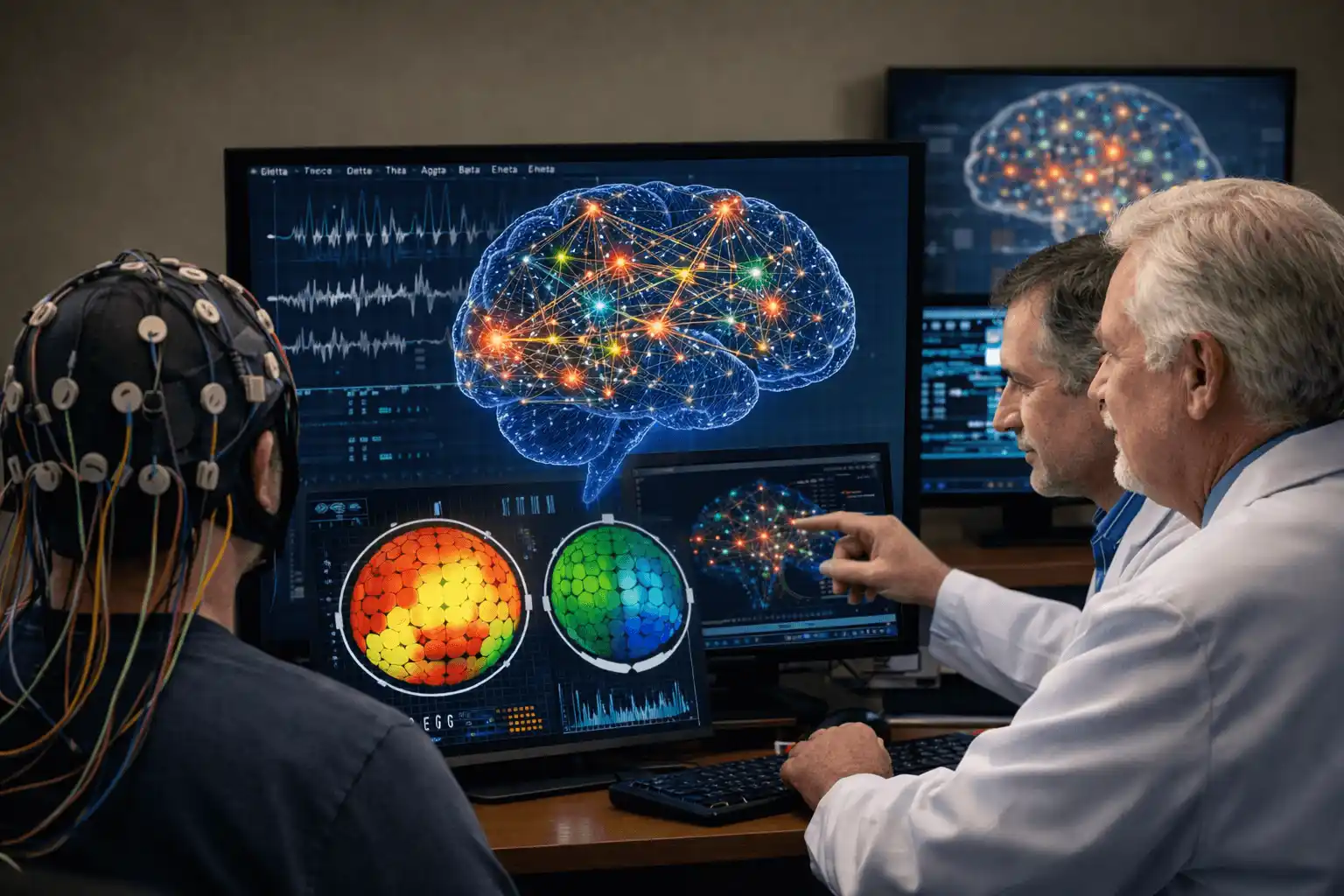
Z-score neurofeedback takes the precision approach by first mapping brain activity across 19 electrode sites, analyzing amplitude and frequency across multiple bands including delta, theta, alpha, beta, and gamma waves. Brain Master technology then compares individual patterns against normative databases representing neuro-typical function, identifying exactly which connectivity pathways show excessive or insufficient activity. This specificity allows clinicians to target dysfunctional networks rather than hammering the entire brain.
Dr. Schneider emphasizes that when you understand alpha rhythms generated from lateral geniculate nucleus, parietal alpha coming from pulvinar, and sensory motor rhythms originating in ventral postural lateral and medial nuclei, you gain insight into where thalamic problems exist. This neuro-anatomical knowledge transforms brain mapping from abstract squiggly lines into precise diagnostic information pointing toward specific treatment targets.
The Molecular Magic Behind Brain Rhythms
Dr. McAlister's explanation of how alpha waves generate reveals the stunning complexity underlying seemingly simple EEG patterns. The beautiful sinusoidal alpha waves visible in occipital regions during relaxed eyes-closed states require an intricate dance between reticular nuclei hyper-polarizing lateral geniculate nuclei. This creates a counterintuitive situation where hyper-polarization, which typically inhibits neural firing, actually generates rhythmic bursting.
The molecular mechanism involves T-calcium channels that respond specifically to hyper-polarization. Once hyper-polarization reaches a certain threshold, these channels open and allow calcium influx that raises the membrane potential enough to trigger sodium channels. This creates synchronized bursting of neuronal activity projecting into occipital cortex, which we observe as alpha rhythm. Understanding this process at the molecular level reveals why certain brain injuries disrupt specific frequency bands while leaving others intact.
When stroke, concussion, or neurodegenerative disease damages thalamic nuclei or their cortical projections, alpha rhythms become dysregulated in predictable patterns. QEEG mapping identifies these disturbances and their cortical locations, pointing clinicians toward which thalamic structures need rehabilitation. This transforms neurofeedback from generic relaxation training into targeted restoration of specific neural circuits.
Remarkable Patient Outcomes Challenge Aging Assumptions
The 72-year-old retired teacher's transformation challenges conventional assumptions about aging and neurological decline. When she first arrived at Hope Brain Center, she reported functioning at only 10% capacity and feeling no meaningful difference between living and death. Her Christmas card months later reported feeling better than she did 20 years earlier at age 52, when Dr. Schneider himself remembers his fifties as a peak decade for intelligence and energy.
This outcome didn't occur through symptom suppression or adaptation to disability. Comprehensive QEEG mapping identified her specific connectivity problems, and Z-score neurofeedback provided her brain with a normative frame of reference for reorganization. Over multiple sessions, her brain witnessed its own dysregulated activity and figured out more efficient patterns. Repeated mapping verified actual connectivity restoration rather than just subjective improvement.
An 8-year-old girl demonstrated equally remarkable results from the opposite end of the age spectrum. Two years behind in reading and failing math with scores in the 50s and 60s, she created nightly homework battles with her exhausted mother. Six weeks into neurofeedback training, school testing showed her reading at grade level with math scores in the 90s. These results had never occurred previously despite years of traditional educational interventions.
Brain Mapping Reveals Addiction Predispositions
Dr. McAlister's research into alcoholism patterns reveals how QEEG brain mapping identifies substance abuse predispositions before addiction develops. Alcoholics consistently show global alpha suppression combined with excess fast-wave activity indicating chronic over-arousal. Their nervous systems exist in a state of uncomfortable hyper-activation that alcohol temporarily normalizes.
When alcoholics consume alcohol, their alpha waves rise into the normal range while excessive beta activity decreases. This explains why addiction becomes their brain's solution to underlying neurological dysregulation. Even more striking, family members of alcoholics who never developed drinking problems themselves show the same brain patterns, suggesting genetic predisposition visible through QEEG mapping.
This knowledge transforms addiction treatment from moral failing requiring willpower into neurological dysfunction requiring re-balancing. Neurofeedback protocols targeting alpha enhancement and beta reduction give these brains the relaxed arousal state they desperately seek through substances. When neural patterns normalize, the drive for self-medication diminishes because the brain no longer experiences the discomfort that substances temporarily relieve.
POTS and Autonomic Dysfunction as Foundation
Throughout the interview, Dr. Schneider returns to a central theme from his My POTS Podcast. The autonomic nervous system represents the foundational neurological system driving virtually everything else. After his own brain traumas triggered POTS, he began recognizing autonomic dysfunction as the pervasive system affecting metabolism, endocrine function, exocrine activity, and brain energy mechanisms throughout his patient population.
The autonomic nervous system communicates body needs to the brain, requesting energy, performance, and proper nutrient processing. When dysautonomia disrupts this communication, cascading dysfunction affects every other system. This explains why comprehensive brain injury treatment requires addressing autonomic regulation rather than just cognitive symptoms. QEEG mapping reveals autonomic dysregulation through specific frequency patterns and connectivity problems that targeted neurofeedback can restore.
The Future with 12,000 Voxels and Cerebellar Mapping
Brain Master's upcoming X-Loretta technology expands resolution from 6,900 to 12,000 voxels, with each voxel representing five cubic millimeters of cortical space. This enhanced resolution allows information from sub-cortical structures including basal ganglia and potentially cerebellum. Dr. McAlister's mention of cerebellar mapping excited Dr. Schneider because functional neurologists understand the cerebellum's crucial role in movement coordination, balance, and cognitive timing.
The ability to map and target cerebellar dysfunction through neurofeedback represents a breakthrough for treating Parkinson's disease, ataxia, and movement disorders that traditional neurology manages with medications rather than rehabilitates through neuroplasticity. As precision increases and technology advances, neurofeedback transitions from experimental alternative therapy to essential neurological rehabilitation tool.
Embrace Precision Over Hammers
Dr. Schneider's message to functional neurologists is clear. Get on board with comprehensive QEEG mapping and Z-score neurofeedback or watch your outcomes remain limited by outdated approaches. The age of neurofeedback has arrived for treating stroke, dementia, Alzheimer's, Parkinson's, and traumatic brain injury through guided neuroplasticity rather than pharmaceutical dependency.
To learn more about Z-score neurofeedback protocols, comprehensive QEEG brain mapping, and precision neurological rehabilitation, listen to the full episode on My POTS Podcast and visit HopeBrainCenter.com. Understanding that your brain can reorganize around optimal connectivity patterns when given proper guidance changes everything about treating neurological conditions through targeted plasticity instead of generic stimulation or lifelong symptom suppression.
Connect with Dr. Joseph Schneider:
LinkedIn: Richard-McAlister-DC-DAAPM-BCN-QEEG-D
Bio: StressTherapySolutions.com
Connect with Dr. Joseph Schneider:
Website: Hope Brain and Body Recovery Center; Hope Regeneration Center
Podcast: MyPOTSPodcast.com
LinkedIn: Joseph Schneider
YouTube: HopeBrainBodyRecoveryCenter
Instagram: @HopeBrainCenter_
Facebook: Hope Brain and Body Recovery Center
Related Blog
Duis mi velit, auctor vitae leo a, luctus congue dolor. Nullam at velit quis tortor malesuada ultrices vitae vitae lacus. Curabitur tortor purus, tempor in dignissim eget, convallis in lorem.



Comments