
Vestibular System Develops at 5 Weeks Before Eyes and Ears with Jerome Rerucha
Dr. Joseph Schneider spent over 35 years treating neurological dysfunction, but his conversation with Jerome Rerucha reveals shocking insights about the vestibular system as the most down-regulated sensory system in modern populations, despite being the first to develop. This technical interview on the My POTS Podcast explores how vestibular function develops at 5 weeks after conception, before eyes, ears, and all proprioceptive systems, yet remains the greatest gap in neurological assessment and rehabilitation, even among functional neurologists. Understanding vestibular system primacy changes everything about treating POTS, balance disorders, brain injury, and chronic neurological conditions through a comprehensive four-grid assessment.
About This Blog
Dr. Joseph Schneider spent over 35 years treating neurological dysfunction, but his conversation with Jerome Rerucha reveals shocking insights about the vestibular system as the most down-regulated sensory system in modern populations, despite being the first to develop. This technical interview on the My POTS Podcast explores how vestibular function develops at 5 weeks after conception, before eyes, ears, and all proprioceptive systems, yet remains the greatest gap in neurological assessment and rehabilitation, even among functional neurologists. Understanding vestibular system primacy changes everything about treating POTS, balance disorders, brain injury, and chronic neurological conditions through a comprehensive four-grid assessment.
Gyrostim represents an FDA-designated breakthrough medical device providing computer-controlled multi-axis rotation for vestibular rehabilitation, approved for treating balance disorders, vestibular dysfunction, POTS, and autonomic nervous system disorders through precise motion-induced stimulation [Neuroscience Group][GYROSTIM]. This technology integration distinguishes modern functional neurology from manual adjustment-only approaches that miss critical vestibular dysfunction underlying seemingly unrelated chronic conditions.
Vestibular System Develops First at 5 Weeks
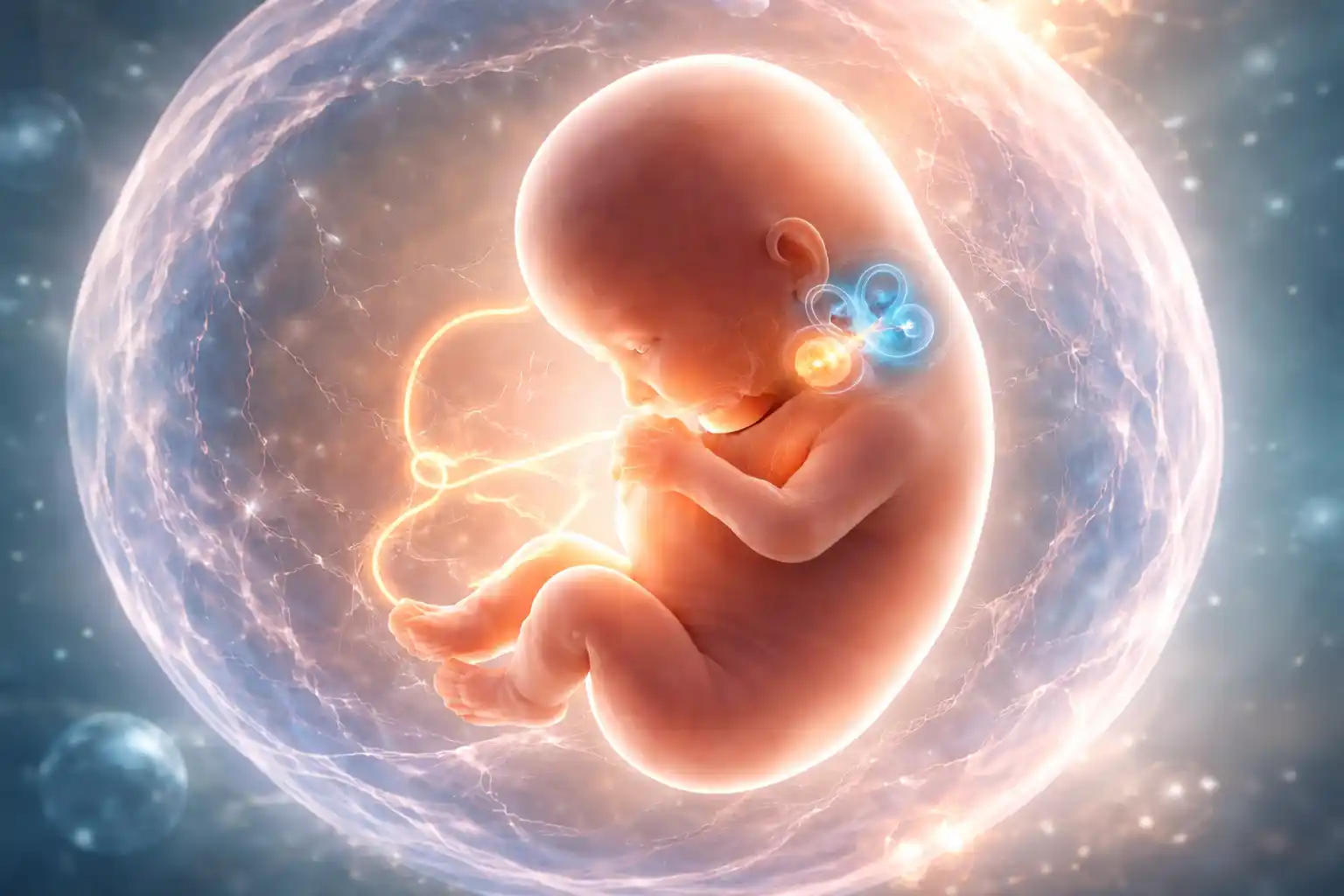
Jerome Rerucha emphasizes a developmental timeline that reveals vestibular system primacy. The neural tube forms at 3 weeks after conception, establishing foundational nervous system architecture. At 5 weeks, the vestibular system develops before any other proprioceptive sensory system exists. Eyes haven't formed yet. Ears don't exist. Proprioceptive sensors throughout the body remain weeks away from development. Yet vestibular structures in the developing inner ear begin functioning immediately.
This timing isn't accidental. Vestibular function provides foundational input for all subsequent neurological development. As the fetus grows inside amniotic fluid, maternal movement creates rotational forces that train vestibular responses. When pregnant women move, exercise, and stay active, babies floating in fluid experience spinning and positional changes that stimulate vestibular development. Inactive pregnancy limits this critical sensory input during developmental windows that never reopen after birth.
For pediatric functional neurologists, this knowledge transforms the treatment approach. Vestibular stimulation tools like Gyrostim provide neurological input to developing nervous systems, potentially creating developmental advantages that persist lifelong. The earlier vestibular training begins, the stronger the foundational neurological architecture becomes for all subsequent sensory integration.
The Four Grids That Should Align
Dr. Schneider explains his comprehensive assessment model requiring alignment of four distinct neurological grids. The visual grid establishes where you are in space through sight, requiring precision about what you see and spatial relationships. The auditory grid processes sound location, knowing exactly where sounds originate in three-dimensional space. The proprioceptive grid involves muscles and joints sensing movement, weight, stress, and position.
The vestibular grid overlays all three others, providing rotational awareness through semicircular canals in the inner ear, plus otoliths judging linear acceleration and head position. When these four grids align properly, autonomic nervous system function remains stable. When any grid shows dysfunction or grids don't align with each other, autonomic dysregulation appears, causing symptoms that patients and doctors attribute to unrelated conditions.
Eye exercises sometimes make patients nauseous or disrupt breathing. Loud noises trigger autonomic responses beyond just auditory discomfort. But vestibular dysfunction creates the most acute autonomic changes, explaining why POTS patients experience such profound symptoms from simple positional changes. The vestibular system's direct brainstem connections mean vestibular dysfunction immediately affects heart rate, blood pressure, breathing, and all autonomic functions.
Adding Cognitive Tasks Reveals Hidden Dysfunction
Dr. Schneider's Gyrostim protocol demonstrates an assessment principle many practitioners miss. Patients spin comfortably at various speeds, rotating through multiple axes while hitting laser targets on surrounding screens. They report zero dizziness, zero nausea, and zero headaches during pure vestibular challenge. The system handles rotation without symptoms.
Then, cognitive tasks get added. Stroop testing requires patients to identify colors while words spell different colors, forcing frontal lobe decision-making. Target sequences demand selective attention, choosing only blue targets, or even numbers, or specific sequences. Suddenly, symptoms spike from zero to level six: dizziness and nausea. What changed?
The cognitive load requiring temporal and frontal lobe integration overwhelms compensation mechanisms, hiding during pure vestibular tasks. Patients who seem fine during basic balance testing show profound dysfunction when vestibular and cognitive systems must coordinate. This pattern appears constantly in POTS cases where autonomic symptoms only emerge during complex multitasking that real life demands constantly.
Gyrostim's computer-controlled movements provide therapeutic challenges impossible through manual therapy, with 30 rotation speeds and multi-axis combinations creating individualized rehabilitation protocols [Neuroscience Group]. The device trains practitioners to recognize subtle dysfunctions that basic testing misses entirely.
From Engineering to Master Control System Understanding
Dr. Schneider's unique background designing power plant simulators at Omni-Data shaped his neurological perspective. Working with engineer Bill Landel, who possessed photographic memory and demanded independent problem-solving, he learned control system architecture where master controllers communicate with subsystems monitoring pressure, temperature, flow, and energy production.
When chiropractor Dr. Bill Oliver explained the brain as master control system of the body, the concept immediately resonated with Dr. Schneider's engineering work. The brain operates exactly like power plant master control, with the spinal nervous system and peripheral nervous system functioning as subsystems providing feedback and executing commands. This engineering lens distinguishes his comprehensive approach from practitioners who adjust segments without understanding system-wide integration.
His supervisor Art Schultz warned that leaving a high-performing project engineer position to absorb chiropractic school student loans meant never catching up financially. Despite this advice, the passion to understand brain control systems drove career transformation. The company eventually supported the transition, requiring successful project completion before release, then helping with the move to New York Chiropractic College.
Non-Symptomatic Populations Show Massive Down-Regulation
Jerome Rerucha's most striking observation involves vestibular down-regulation even in people without obvious symptoms. Looking at figure skaters executing triple axels, gymnasts performing floor routines, and divers completing complex rotations reveals vestibular capabilities far beyond average populations. The gap between what vestibular systems can achieve versus how most people function shows profound down-regulation affecting everyone.
This down-regulation occurs gradually as modern sedentary lifestyles eliminate vestibular challenges. People drive cars instead of walking through varied terrain. They use elevators instead of stairs, requiring dynamic balance. They sit at desks instead of moving through three-dimensional space. Over decades, vestibular systems atrophy from disuse just like muscles shrink without resistance training.
The shocking part: even non-symptomatic people show this down-regulation. They don't complain about dizziness or balance problems because they've adapted to limited function. Only when comprehensive testing reveals their baseline compared to peak capability does the dysfunction become apparent. For symptomatic populations with POTS, brain injury, or chronic conditions, vestibular down-regulation compounds other dysfunctions creating cascading autonomic failures.
Technology Integration Transforms Outcomes
Dr. Schneider's clinic progression from manual barber chair spinning to Gyrostim technology demonstrates functional neurology evolution. Manual spinning provided thousands of hours of vestibular training, teaching technique for smooth rotation, abrupt stops, focus versus non-focus conditions, and head position variations isolating specific canals. This foundation remained valuable even after technology integration.
Gyrostim added capabilities impossible manually. Isolating movements with precision, controlling exact rotation speeds up to 30 rotations per minute, combining multi-axis movements, integrating cognitive tasks with target hitting, and collecting objective data tracking progress over time. The lift accessory enables additional positional variations. Most importantly, Gyrostim trains practitioners by revealing dysfunction patterns manual assessment misses.
Whole body vibration provides complementary benefits, especially with movement exercises during vibration. Jerome emphasizes how down-regulated populations don't receive equivalent neuro-mechanobiology stimulus during entire days compared to minutes of vibration therapy. The synchronous whole-body approach creates systemic benefits impossible through isolated exercises.
Comprehensive Assessment Drives Success
Dr. Schneider and Jerome agree that missing any grid (visual, auditory, proprioceptive, vestibular) prevents permanent results. Patients may improve temporarily through isolated interventions, but regression occurs because underlying multi-system dysfunction wasn't addressed comprehensively. This explains why some patients respond dramatically to chiropractic adjustments while others show minimal change despite technically correct treatment.
The vestibular component often represents the missing piece. Practitioners skilled in Gonstead, Thompson, activator, or other adjustment techniques produce excellent mechanical corrections but may not assess vestibular function comprehensively. Adding vestibular rehabilitation through Gyrostim or other modalities completes the neurological picture, allowing sustained improvement instead of temporary relief.
To learn more about vestibular rehabilitation, Gyrostim technology, four-grid neurological assessment, and comprehensive functional neurology, listen to the full episode on My POTS Podcast and visit HopeBrainCenter.com or call 610-544-9800. Understanding that vestibular system develops first at 5 weeks yet remains most down-regulated sensory system changes everything about treating chronic neurological dysfunction, POTS, balance disorders, and brain injury through targeted rehabilitation addressing root causes rather than managing symptoms.
Related Blog
Duis mi velit, auctor vitae leo a, luctus congue dolor. Nullam at velit quis tortor malesuada ultrices vitae vitae lacus. Curabitur tortor purus, tempor in dignissim eget, convallis in lorem.

Comments